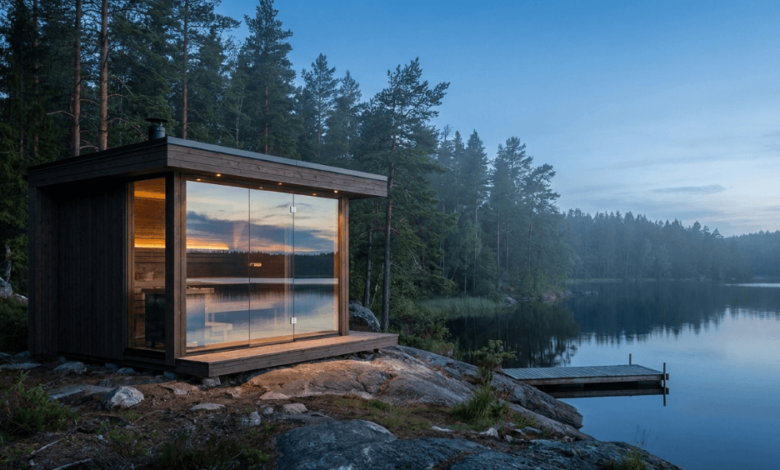
A budget-minded outdoor sauna owner can realistically keep monthly running costs between $10 and $35, depending on heater type, session frequency, and how well the cabin holds heat. That range assumes a small electric or infrared unit used three to four times a week at average U.S. residential electricity rates. Wood-fired setups can undercut that if fuel is cheap, but the gap is smaller than most first-time buyers expect.
Which Heater Choice Actually Sets the Monthly Floor?
Heater type does more to control cost than almost any other decision. A compact infrared cabin with a 1.5 to 2 kW panel array draws roughly 1 to 1.5 kWh for a 40-minute session, which lands around 20 to 30 cents at a typical residential rate. Run that three times a week and the electric portion of ownership sits at $8 to $12 a month. A traditional 6 kW electric heater, by contrast, needs the room and the rocks to reach 170°F or higher before a session even starts, pushing a comparable session to 4 or 5 kWh and $10 to $16 a month at the same frequency, closer to $30 to $35 if used daily.
Does the Cheapest Kit Up Front Save Money Overall?
Not always. A bargain kit with thin single-layer wall panels and minimal door sealing loses heat fast once the outdoor air temperature drops, and the heater has to keep working to hold the room at target. Buyers shopping strictly on sticker price sometimes end up paying more over a year in electricity than they saved buying the cheaper build in the first place. A slightly higher upfront cost for double-wall construction or a tighter door gasket usually pays for itself within a season or two of regular outdoor use, particularly in a climate with real winters.
How Many Sessions a Week Fits a Tight Budget?
Two to three sessions a week is a comfortable, sustainable frequency for most budgets, keeping the electric line item in the $10 to $20 range for a smaller unit. Daily use with a larger traditional heater is where the number climbs fastest, sometimes reaching $50 to $60 a month once winter heat loss is factored in. A practical middle ground many owners land on is fewer, longer sessions rather than several short ones, since each heat-up carries a fixed energy cost regardless of how long you stay once the room is hot.
Where Can You Actually Trim Cost Without Losing the Experience?
Scheduling sessions during off-peak utility hours, where your provider offers time-of-use rates, can shave a meaningful percentage off the electric bill for very little effort. Batching sessions with a partner or housemate instead of heating the cabin twice in one evening cuts the fixed warm-up cost in half. Buyers comparing wattage, insulation specs, and price across smaller and larger builds before committing can look through the SweatDecks catalog to see how entry-level electric and infrared models stack up on both purchase price and expected monthly draw. A well-sized heater for the actual cabin volume, rather than an oversized unit bought “to be safe,” is one of the simplest ways to avoid paying for capacity that never gets used.
What Ongoing Costs Do Tight Budgets Often Miss?
Electricity or wood fuel is the number most people budget for, but it is not the only one. Heater rocks lose efficiency over a year or two of steady use and typically run $30 to $80 to replace. Exterior wood benefits from an occasional coat of oil or sealant, often $40 to $100 a year in materials for a small cabin if you do the work yourself. Neither cost is large on its own, but skipping them to save money short term usually means a bigger repair bill later, which defeats the purpose of budgeting carefully in the first place.
How Much Does Climate Change the Monthly Number?
A cabin on an exposed patio in a cold, windy region works harder than the same unit tucked against a house wall in a milder climate, because more of the generated heat fights outdoor air before the room reaches target. That gap can add 15 to 25 percent to a winter month’s electric cost compared to the same heater in a sheltered spot. Budget shoppers in colder states get more value out of a slightly higher-spec door seal and wall insulation than the same money spent on extra heater wattage, since a tighter room needs less power to hold temperature once it gets there. Positioning the cabin out of direct wind, even a few feet closer to a fence or hedge line, is a free change that measurably helps the math.
Is the Health Case Strong Enough to Justify the Cost?
Even on a tight budget, the running cost of a home sauna compares well against alternatives. A single visit to a public sauna or spa commonly runs $15 to $30, meaning a household using a home unit three times a week can spend less in a month than two or three outside visits would cost. There is also a reasonable evidence base behind making it a regular habit rather than an occasional treat. A Mayo Clinic Proceedings review found sauna bathing associated with a range of cardiovascular and general health markers, and an older review in the American Journal of Medicine reported similar associations between regular sauna use and lower cardiovascular risk in long-term users. These are association findings from observational data, not proof that sauna use alone changes outcomes, but they support treating the monthly running cost as a worthwhile utility rather than a discretionary line item to cut first.
Frequently Asked Questions
What is the cheapest way to run an outdoor sauna each month?
A small two-person infrared cabin with a 1.5 to 2 kW panel setup, used three times a week, usually costs $8 to $18 a month in electricity. That is the lowest realistic figure without switching to a free wood supply.
Is a wood-fired outdoor sauna actually cheaper than electric?
Only if the wood is free or nearly free. A rick of seasoned firewood bought locally often costs close to what a comparable amount of electric heat would, once you count the extra time spent tending the stove.
How much can insulation actually save on a tight budget?
A poorly sealed cabin can take 15 to 20 minutes longer to reach temperature than a well-insulated one of the same size, which directly adds kilowatt-hours to every single session over a year.
Does running fewer, longer sessions save money?
Somewhat. A shared heat-up cost split across a longer 45-minute session with two or three rounds is more efficient per minute of use than several separate short heat-ups on different days.
What is the one cost budget buyers forget to plan for?
Heater rock replacement. Rocks lose efficiency after a year or two of regular use and cost $30 to $80 to replace, a small but real line item that rarely shows up in an initial price comparison.
References
- Cardiovascular and Other Health Benefits of Sauna Bathing: A Review of the Evidence, Mayo Clinic Proceedings, 2018
- Benefits and risks of sauna bathing, The American Journal of Medicine, 2001
- Effects of heat and cold on health, with special reference to Finnish sauna bathing, American Journal of Physiology, 2018
- Saunas and your health, Harvard Health Publishing